



How Review Signals Influence Consumer Trust and Brand Authority

Table of Contents
Every day, thousands of shoppers decide where to spend their money based on online reviews. Star ratings, overall scores, and recent comments shape how they view a business. Those signals tell potential buyers whether a company seems reliable or one to avoid. As more transactions move online, a steady flow of honest feedback becomes essential for building credibility and bringing in new customers.
Understanding how review signals affect buyer trust and brand reputation helps business owners manage their digital footprint. Platforms like Get Reviews Buzz assist companies in gathering authentic social proof, tracking customer sentiment, and boosting buyer confidence across major review sites. This piece covers how those trust markers work, how search engines read them, and how businesses can use them effectively.
How Review Signals Build Consumer Trust
Review signals are simply the data points that appear every time someone leaves feedback on Google, Yelp, Trustpilot, or similar sites. The main ones matter most:
How many reviews a business has collected over time
The average star rating
How recent those reviews are
The actual tone and wording people use
Whether the owner bothers to reply
For anyone searching local services, these signals work a lot like digital word of mouth. Surveys show 93% of people read online reviews before they buy, and 84% trust them about as much as they trust a friend’s recommendation. That’s a serious amount of influence.
A sky-high rating with almost no reviews often feels off. Three perfect 5-star reviews can look like they came from family or staff. On the other hand, a solid 4.6 across hundreds of reviews starts to feel real, consistent performance, actual customers, a track record you can trust.
Businesses that regularly answer both the good comments and the complaints show they’re still paying attention. Most buyers just want to know the company won’t disappear after the payment clears.
Review signal | How buyers interpret it |
High volume | Shows ongoing business activity and steady popularity |
Fresh recency | Confirms the business is open and maintaining standards |
Consistent rating | Creates clear expectations for service quality |
Regular replies | Shows the owner cares about customer experience |
How Search Engines Use Review Signals For Rankings
Review signals do more than persuade prospective buyers. They feed directly into local search algorithms. Google uses review data to determine map pack placements, local search positions, and business authority.
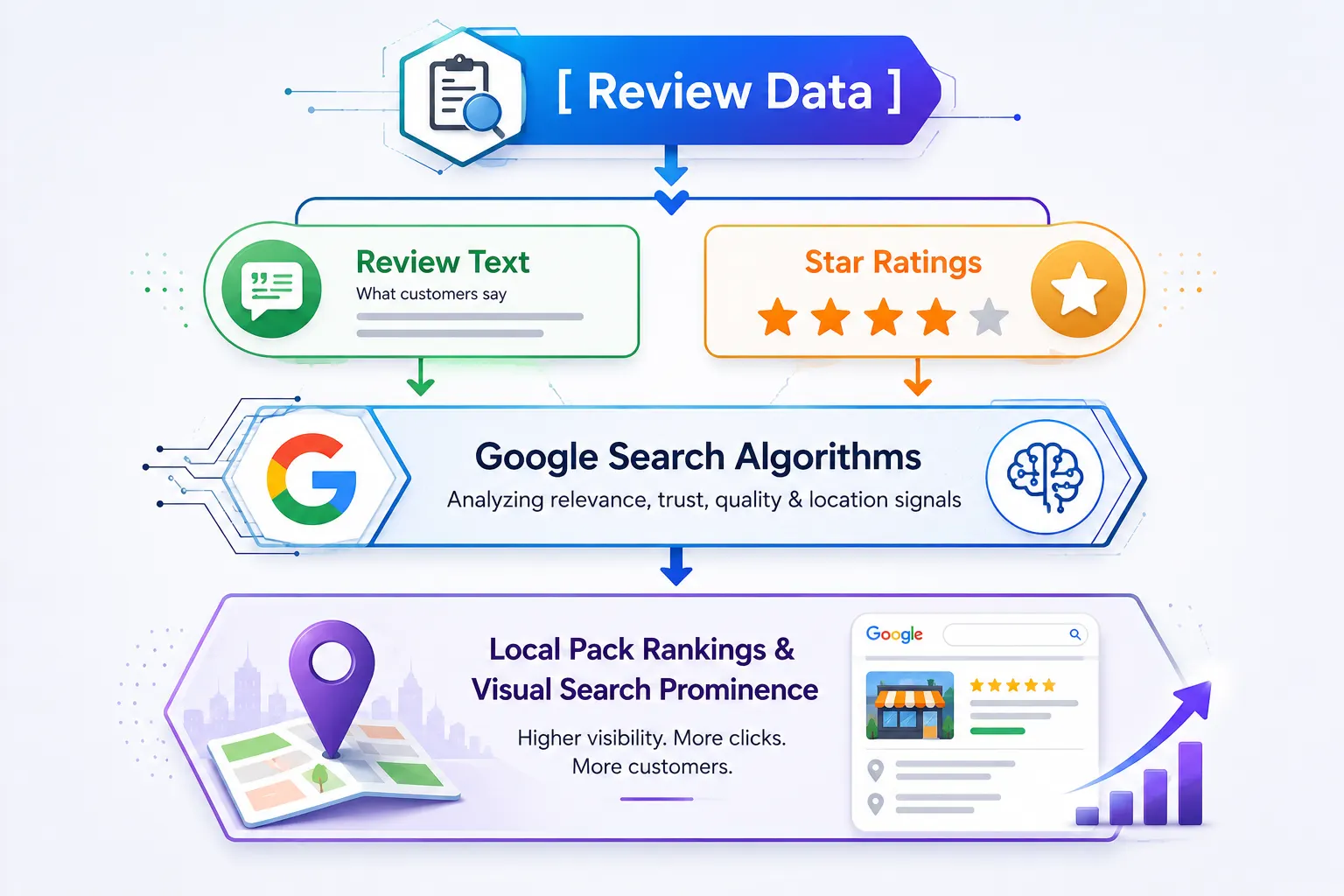
When customers include specific services in their review text, search engines index those terms. If someone writes, "They fixed my leaky roof quickly," Google connects that listing to local searches for roof repair.
To see how these rating mechanics directly impact map placement, check out our guide on how positive Google reviews impact local search rankings. Visibility and trust feed off each other: better rankings bring more customers, which generates more reviews, reinforcing your local presence.
Practical Steps To Gather More Customer Reviews
Building solid review signals takes consistency. Businesses that keep collecting feedback regularly give themselves a buffer when the occasional unhappy customer shows up.
Here’s how to keep reviews coming in:
Automate the request - Send a follow-up text or email right after the service or sale is finished.
Make it easy - Give customers a direct link to the review page so they don’t have to dig through your website.
Train your team - Ask staff to request feedback right after a positive interaction.
Show customers where to go - Guide buyers through the posting process. Sharing practical resources like our guide on how to write a Google review helps non-tech-savvy clients submit their feedback without frustration.
Some business owners search for shortcuts and look into options to Buy Online Reviews to pad their numbers or recover from bad publicity. Buying fake feedback carries heavy risks if platforms detect unnatural patterns.
Focusing on steady, real requests gives you lasting results. Understanding how review platforms operate, including how Google review points incentivize active contributors, offers clear insight into how local guides shape search engagement.
Managing Negative Reviews Without Damaging Your Brand
No business gets everything right all the time. Negative reviews will show up. What matters is how you handle them, that response can either damage your business or demonstrate real professionalism.
Data shows that profiles with mixed ratings often convert better than ones with perfect scores. A clean 5.0 can make people suspicious and lead them to assume the reviews are fake. Most shoppers find a rating between 4.2 and 4.7 more genuine.
When responding to bad reviews:
Reply fast within a day or two so people know someone's listening.
Don't argue in public. Acknowledge they're annoyed, say a quick sorry, and move it to a DM or email.
Give them a direct way to reach you, a phone number or email, so it actually gets fixed.
When prospective buyers watch a company resolve problems calmly, confidence goes up. A thoughtful response turns a mistake into proof that you value customer service.
The Paid Review Question: Risks And Reality
When the local competition gets really tough, marketing teams sometimes start looking at options to buy Google reviews just to keep up with the bigger players already in the area, or to give a brand-new location a quicker push.
Pretty much every major review platform bans paid or incentivized reviews. Search engines and the review sites themselves have filters that pick up on fake activity. The red flags that usually get reviews removed or whole profiles suspended include:
Multiple accounts posting from identical IP addresses or locations.
Unusual spikes in review counts without any matching increase in website traffic or store visits.
Accounts leaving identical text across completely different business pages.
Profiles with no past geographic history suddenly leaving glowing ratings.
If a platform flags an account for manipulation, consequences range from removing reviews to placing public warnings on the business listing. Collecting genuine feedback directly from real clients remains the safest route to building real local rankings and customer trust.
Tracking How Review Signals Affect Sales
Understanding your return on investment means looking at business numbers alongside star averages.
Watch these key indicators:
Conversion rate: Measure whether website visitors turn into leads more often as your review count grows.
Direct actions: Monitor calls, direction requests, and message taps inside your Google Business Profile dashboard.
Review pace: Track how many new reviews come in each month to ensure steady growth.
Common keywords: Scan customer comments for recurring themes to identify what is working and what needs fixing in your operations.
By simplifying your request process, maintaining your profiles, and addressing criticism directly, you turn review signals into steady customer growth.
Conclusion
Reviews are what make a business look credible online. They’re often the reason someone who just found you decides to buy. Keep new reviews coming in at a steady pace, pay attention to the overall tone, and deal with complaints calmly. That protects your search rankings and builds trust that sticks around. Working with a service like Get Reviews Buzz handles the collecting so you don’t have to figure it out yourself or risk getting dinged by the platforms. Focus on honest feedback and keep your profiles active, that’s usually enough to keep growth steady.
Frequently Asked Questions
How does Get Reviews Buzz help with brand reputation?
It helps businesses organize review requests, track feedback across multiple sites, and grow their online presence without running into policy issues.
Why does review recency matter as much as the overall rating?
Shoppers and search engines both look at recent activity to see how a business is doing right now. A 4.9 with no new reviews for two years feels less reliable than a 4.5 that has several from last week.
Why Does Review Recency Matter As Much As The Overall Rating?
Shoppers and search engines check recent activity to see how a business operates right now. A 4.9 rating with no new reviews in two years feels less reliable than a 4.5 rating with several reviews from last week.
Do negative reviews permanently hurt local search positions?
No. Occasional bad reviews make a profile look real. Keep the positive ones coming and handle complaints well, and a few low ratings won’t wreck your rankings.
How long does it take for new reviews to affect local map rankings?
Score updates happen quickly. Noticeable ranking changes usually take two to six weeks while the algorithms dig into review consistency, word patterns, and user activity.