



Online Reputation Repair: A 2026 Review Management Guide
Table of Contents
Protect Your Reputation
Restore customer trust with proactive positive reviews.
Boost Online ReputationA dental practice in Ohio had great service, a clean office, and a receptionist who knew every patient’s name. None of that showed up on Google. What showed up instead were three unanswered one-star reviews from 2022, a complaint about a billing mix-up that never got a reply, and a total review count stuck at 14. New patients calling to book appointments kept asking about “that billing thing” before they even walked in the door.
This happens to a lot of good businesses. The service is fine. The product works. But the online record tells a different story, and future customers trust that record more than any sales pitch.
Fixing it isn’t about scrubbing the internet clean. In 2026, review platforms are better at spotting manipulation, regulators are stricter about fake reviews, and customers are more skeptical of anything that looks too polished. Real reputation repair means dealing with what actually happened, answering it honestly, and building a track record that outweighs the bad moments.
What Is Online Reputation Repair?
Online reputation repair is the process of fixing damage already done to how a business appears online. That includes negative reviews, unanswered complaints, outdated or inaccurate information, or a pattern of poor feedback that hurts trust and visibility.
It’s part of a larger category called online reputation management. People often use the terms interchangeably, but they mean different things.
Online Reputation Management vs. Repair
Online reputation management is the ongoing work of shaping and maintaining how people see your business. It covers monitoring, keeping profiles up to date, responding to feedback, and building a positive presence before problems start.
Online reputation repair is what you do after something has already gone wrong. It’s damage control, not regular upkeep.
Review management is the day-to-day work of reading, answering, and organizing customer reviews on platforms like Google, Yelp, Facebook, and industry-specific sites.
Reputation monitoring is narrower. It’s simply tracking what’s being said about your business online so nothing catches you off guard.
In short: reputation management is what you do all the time. Reputation repair is what you do after something goes wrong. Review management and monitoring support both.
Why Online Reputation Matters in 2026
Customers research before they spend money, and reviews are usually the first place they look. BrightLocal’s Local Consumer Review Survey has tracked this for more than a decade. Most people still read reviews when choosing a local business, and they pay attention to both the content and how recent the reviews are.
What’s changed is trust, not the habit. Trust in online reviews peaked around 2016 and 2017, when many people said they trusted reviews as much as personal recommendations. That number has dropped as people became more aware that reviews can be faked. Reviews still matter. Authenticity matters more. Customers now read more carefully, compare details, and form their own judgment instead of taking a star rating at face value.
This shows up in concrete ways for businesses:
Whether someone clicks through to the website at all
Whether they call or book after reading
How they talk about the business to other people later
Reviews influence trust and buying decisions. It is not accurate to claim that a certain number of reviews will automatically move a business higher in search rankings. Google has never published a formula like that, and treating reviews only as an SEO tactic misses the real point.
How to Repair Your Online Reputation Step by Step
1. Audit Your Current Online Reputation
Search your business name. Check every platform where customers might leave reviews. Read everything, not just the recent ones.
2. Identify Recurring Complaints
One angry review about a slow refund is a bad day. Five reviews mentioning slow refunds over eight months is a process problem.
3. Separate Genuine Complaints from Policy Violations
Most negative reviews are real experiences from real customers, even when they’re harsh. A smaller number cross into fake, spammy, or abusive territory. Treat these two groups differently.
4. Respond to Negative Reviews Professionally
This step alone changes how a profile looks to a new visitor. Details are below.
5. Report Reviews That Violate Platform Policies
Not every negative review qualifies for removal. More on this later.
6. Fix the Underlying Customer Experience Problem
If three people mention the same issue, that’s useful data. Being polite without fixing it doesn’t stop the next complaint.
7. Encourage Genuine Customers to Leave Honest Feedback
More reviews from more customers reduce the visibility of old complaints and give a fuller picture.
8. Monitor Reviews Consistently
A monthly check is common. Higher-volume businesses may want weekly.
9. Build Positive Brand Mentions Elsewhere
Local press, community involvement, and accurate business listings all affect how a business shows up in search.
10. Measure Progress Over Time
Track average rating, review volume, response rate, and response time, not just the star number.
How Should You Respond to Negative Reviews?
The reply matters as much as the review itself. Everyone reading it later is judging both.
Basic Ground Rules
Respond publicly, but keep it short and specific. If a complaint involves account details, order numbers, or anything personal, acknowledge it publicly and ask the person to continue the conversation by phone or email. Don’t discuss specifics in the comments.
Acknowledge what’s legitimate. If someone waited 40 minutes past their appointment time, saying so plainly does more good than a vague “we’re sorry you feel that way.”
Avoid defensive language. Phrases like “that’s not how it happened” or “you clearly don’t understand our policy” confirm the reviewer’s frustration to anyone reading along.
Personalize every response. Copy-pasted replies are easy to spot and signal that no one actually read the complaint.
Examples of Strong Responses
“Thanks for flagging this, Maria. A 40-minute wait isn’t the experience we aim for, and I’d like to look into what happened that day. Please reach out to me directly at [contact] so I can follow up.”
“You’re right that the invoice was confusing. We’ve since simplified that format. Appreciate you taking the time to point it out.”
“We’re sorry the replacement part arrived late. That’s on our shipping partner, not an excuse, and we’re addressing it with them directly. Feel free to reach out if you haven’t received a resolution yet.”
None of these argue, over-explain, or promise something the business can’t deliver. They’re short, human, and specific.
Can You Remove Negative or Fake Google Reviews?
Not just because a review is negative. Google is explicit: businesses can report any review, but only reviews that violate Google’s content policies are eligible for removal. Disagreeing with a review is not grounds for taking it down.
There’s a clear difference between:
A legitimate negative review: a customer had a bad experience and said so.
Content that violates policy: spam, off-topic posts, harassment, hate speech, sexually explicit material, or reviews tied to a conflict of interest (such as a competitor posing as a customer).
Google’s Prohibited and Restricted Content policy spells these categories out in detail. If a review clearly falls into one of them, flag it through the business profile and choose the relevant violation reason. If it’s simply an unhappy customer, a thoughtful public response is the better move. A removal request is likely to be denied.
How Can You Get More Genuine Reviews?
The goal is more real feedback from real customers, gathered consistently, not a sudden spike during a slow month.
Practical, Policy-Compliant Ways to Ask
Ask after a genuine interaction, while the experience is still fresh.
Send a direct link by text or email rather than making people search for the business.
Use QR codes on receipts or at checkout for in-person businesses.
Ask every customer, not only the ones who seem happy. Google’s policy prohibits selectively soliciting reviews from customers likely to leave positive feedback (known as review gating).
Respond to existing reviews, both positive and negative. People are more willing to leave feedback when they can see that comments actually get read.
Common Online Reputation Repair Mistakes
Ignoring negative reviews and hoping they’ll disappear
Arguing publicly with a reviewer
Making excuses instead of addressing the issue
Sending the same copy-pasted response to every review
Trying to get every negative review removed, including legitimate ones
Buying reviews or offering incentives for positive ones
Only asking happy customers to leave feedback
Promising specific ranking results or a guaranteed rating
Fixating on the star average instead of the experience behind it
How Long Does Online Reputation Repair Take?
There’s no fixed timeline. Anyone promising one is guessing.
A business dealing with a handful of old, unanswered reviews might see a noticeably different profile within a few weeks of consistent responses and new reviews coming in.
A business recovering from a widespread service problem or a wave of negative press is looking at months of steady work: fixing the underlying issue, responding to feedback, and letting a larger volume of recent, positive experiences balance out the older complaints.
What matters more than speed is consistency. A profile that gets attention every week looks different a year from now than one that gets a burst of effort and then goes quiet again.
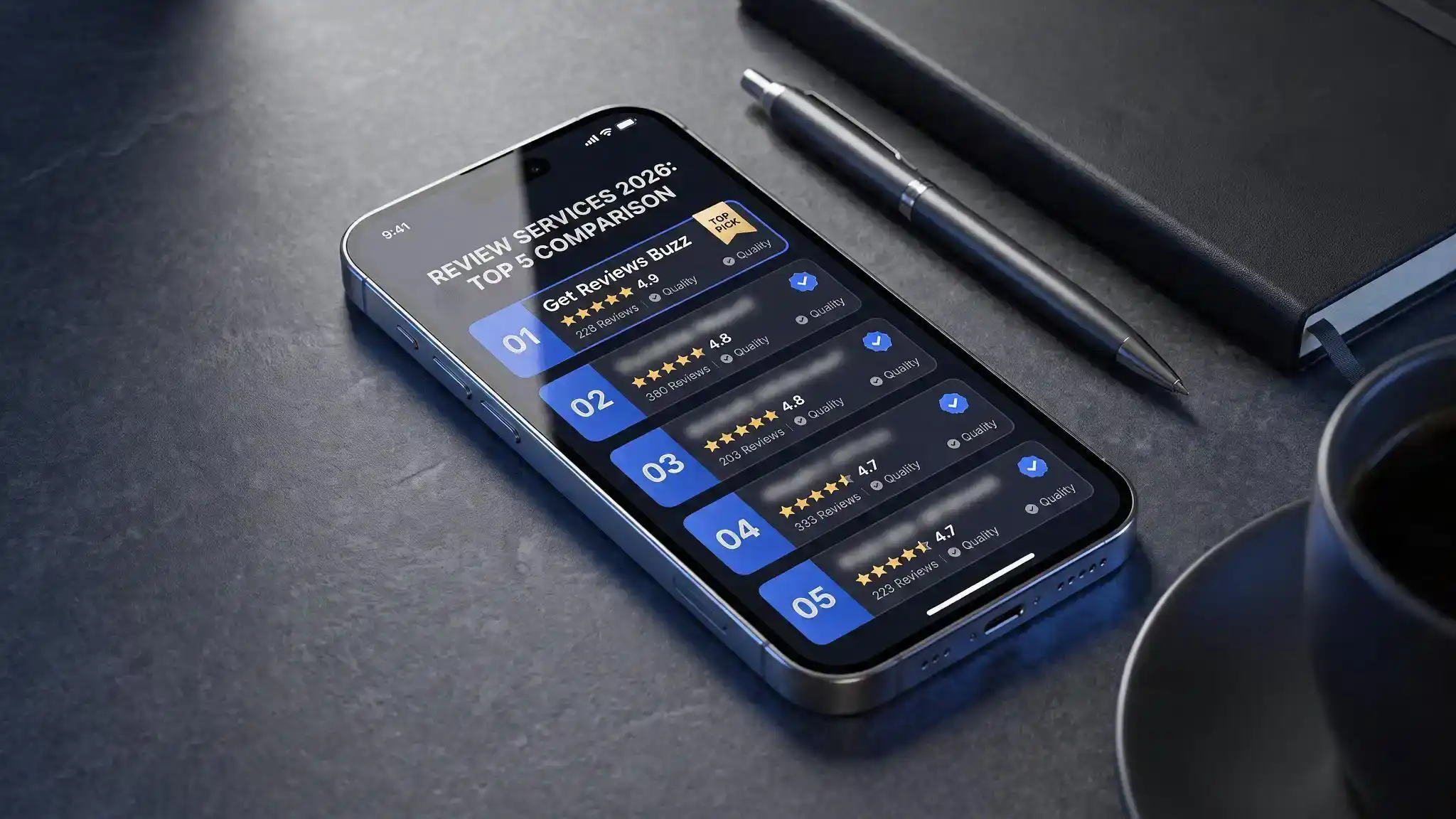
How Get Reviews Buzz Can Help With Reputation Building
Your entire review strategy should work around your business, its customers, location, and reputation goals. Get Reviews Buzz is designed to support a structured review-building process rather than using the same approach for every business. From choosing a suitable review strategy to maintaining a steady flow of feedback, the process can be tailored to your specific needs.
Get Reviews Buzz focuses on:
Business-focused review strategy: Review efforts are planned around your business, target audience, location, and reputation goals.
Custom review content: Reviews are written to reflect different customer experiences while keeping the content relevant to your business and services.
Gradual delivery: Reviews are delivered over time rather than appearing all at once, helping maintain a more natural-looking review profile.
Relevant active profiles: The service focuses on profiles that align with the business’s location and audience, helping maintain a review presence that fits the brand.
Flexible support: One-time and subscription options allow businesses to choose an approach based on their immediate or ongoing reputation needs.
The goal is to make review management more consistent and aligned with your business instead of relying on a one-size-fits-all approach. For the strongest long-term reputation, these efforts should still be supported by genuine customer experiences, quality service, and honest feedback.
Final Takeaway
Reputation repair isn’t a single action. It’s a sequence:
Monitor what’s being said
Understand what the feedback is actually telling you
Respond professionally and specifically
Fix whatever is genuinely broken
Earn new reviews from real customers
Keep doing all of it consistently, rather than in one-time bursts
None of that requires removing every bad review or manufacturing good ones. Both approaches tend to backfire, and one of them is against the law. What works is treating negative feedback as information, treating customers as people who deserve a real response, and giving the process enough time to show results.
For businesses that want a more organized way to keep that process running, sending review requests, tracking feedback, and staying on top of responses, tools like Get Reviews Buzz can help keep the day-to-day work from slipping, without cutting any corners on how the reviews actually get earned.